現在位置 : 藥物 > Acetylcysteine (富泌舒發泡錠 Fluimucil) (愛克痰顆粒劑, Actein)
|
Acetylcysteine
富泌舒發泡錠 (Fluimucil) 英文名稱: Fluimucil A 600mg Effervescent Tablets 學名(成份名): Acetylcysteine 藥品劑型 : 發泡錠 單位含量: 600毫克/錠 主要用途: 祛痰 副作用: 噁心、嘔吐、過敏反應(少見) 使用禁忌: 對本藥有過敏病史之患者 注意事項:本藥為發泡錠,須加水溶解後,混勻服用。 藥品可能帶有硫臭味,非本藥變質敗壞,請安心使用。 支氣管氣喘,呼吸功能不全的病患使用本藥宜小心,若出現支氣管痙攣現象,請立刻暫停服藥。 藥商名稱: 幸生實業股份有限公司 健保代碼: B023898100 英文名稱: Fluimucil Effervescent Tablets
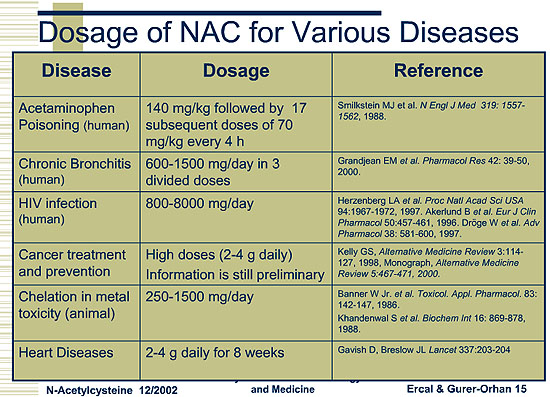
中文名稱:富泌舒發泡錠, 橙樹化痰素 Fluimucil此藥成份為Acetylcysteine, 包含cysteine結構,可提供Acetaminophen代謝所需的sulfation,形成一個intoxic structure(soluble),而降低經Cytochrome p450 oxidation形成有毒的代謝產物。 Fluimucil (Acetylcysteine) 通常是用來化痰, 600mg, 一天吃1-2次. Fluimucil (Acetylcysteine) 亦可用作為 Acetaminophen中毒解毒劑. Acetaminophen中毒使用140mg/kg loading, 70mg/kg X 17 doses.
如果準備接受放射性造影劑的心臟病人身上也會用到,是為了預防顯影劑造成的腎衰竭. 通常檢查前前一天, 當天, 後一天會使用Fluimucil 600mg, 不過一天用兩次用三天就夠了. |
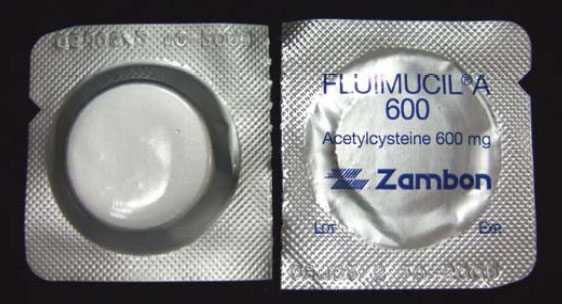
富泌舒發泡錠 (Fluimucil)
|
|
Actein 200mg 愛克痰顆粒劑 200mg.
藥商名稱 : 健喬信元醫藥生技股份有限公司 健保代碼 : A037598116 每公克中含有Acetylcysteine ----- 66.7 mg. 每包含有Acetylcysteine ----- 200mg Acetylcysteine 為一具有 Sulfahydryl Group之氨基酸衍生物, 口服後能直接與粘液蛋白中之Disulfide Linkage產生置換反應, 使龐大的粘液蛋白分解成微小分子, 因而減低痰之粘稠度, 使痰易於咳出。此外, 當粘膜發炎時, 其含硫氨基酸會因代謝旺盛而造成不足之現象, 本品能迅速補充所須之含硫氨基酸, 而加速受傷粘膜組織之修護與再生, 故又具抗炎症之作用。 減少呼吸道黏膜分泌的黏稠性成人:每次一包200mg,每天3次。 小孩:每次1/2包100mg,每天2~3次,並依年齡症狀酌予增減之。 請依醫師,藥師指示服用。 1. 一般的注意 : 有支氣管分泌物增加時應小心觀察,若有自然喀出困難之場合,應行機械的吸引與體位變換等適當之處置。 2. 慎重投與 : A: 支氣管氣喘、呼吸機能不全之患者( 支氣管痙攣所引起,若 認為有異常時,應中止使 用,並作支氣管擴張劑投與等適切 之處置。) B: 高齡者。 副作用: A.消化器:偶有噁心、嘔吐、食慾不振、輕微臭氣 (硫黃臭)等症狀出 現。 B.過敏症:有發疹等過敏症狀出現時應中止使用。 C.其他:血痰、惡寒、發熱、鼻漏、口內炎等。本品極易吸濕,請置於乾燥處所,於 15~30℃ 下存放。 |
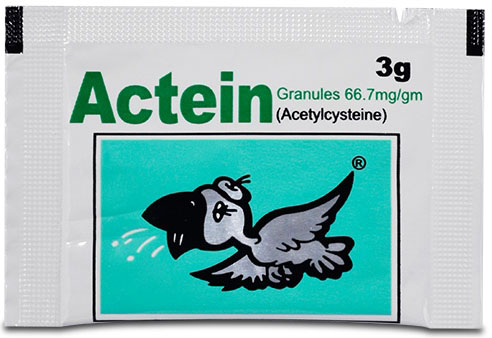
Actein 200mg 愛克痰顆粒劑 200mg. 每公克中含有Acetylcysteine ----- 66.7 mg. 每包含有 Acetylcysteine-----200mg
|
|
Acetylcysteine
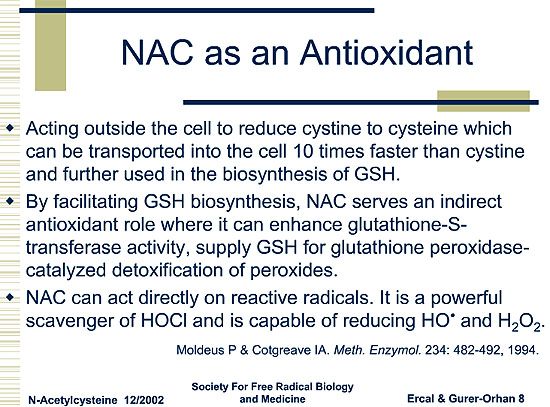
Acetylcysteine, also known as N-acetylcysteine or N-acetyl-L-cysteine (abbreviated NAC), is a pharmaceutical drug and nutritional supplement used primarily as a mucolytic agent and in the management of paracetamol (acetaminophen) overdose. Other uses include sulfate repletion in conditions, such as autism, where cysteine and related sulfur amino acids may be depleted. Acetylcysteine is a derivative of cysteine; an acetyl group that is attached to the nitrogen atom. This compound is sold as a dietary supplement commonly claiming antioxidant and liver protecting effects. It is used as a cough medicine because it breaks disulfide bonds in mucus and liquefies it, making it easier to cough up. It is also this action of breaking disulfide bonds that makes it useful in thinning the abnormally thick mucus in cystic and pulmonary fibrosis patients. |
|
Medical Uses of Acetylcysteine (Wiki)
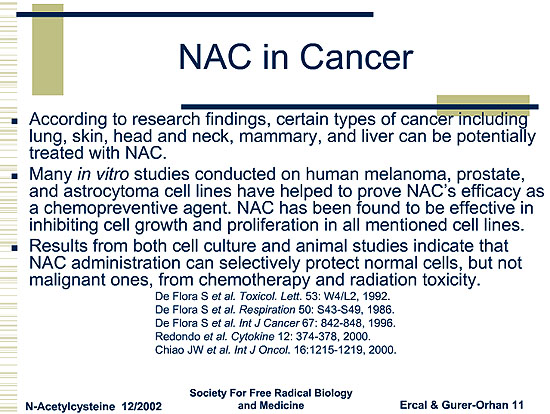
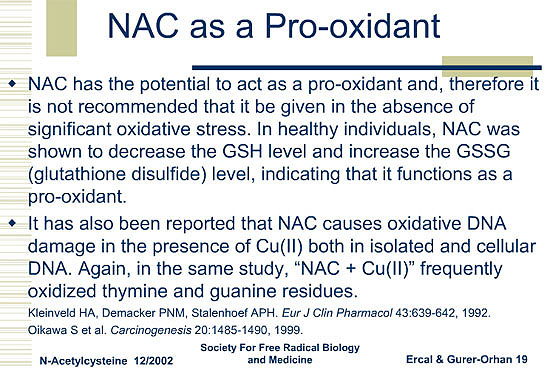
Paracetamol overdose (Paracetamol poisoning) Intravenous acetylcysteine is indicated for the treatment of paracetamol (acetaminophen) overdose. When paracetamol is taken in large quantities, a minor metabolite called N-acetyl-p-benzoquinone imine (NAPQI) accumulates within the body. It is normally conjugated by glutathione, but when taken in excess, the body's glutathione reserves are not sufficient to inactivate the toxic NAPQI. This metabolite is then free to react with key hepatic enzymes, therefore damaging hepatocytes. This may lead to severe liver damage and even death by acute liver failure. For this indication, acetylcysteine acts to augment the glutathione reserves in the body and, together with glutathione, directly bind to toxic metabolites. These actions serve to protect hepatocytes in the liver from NAPQI toxicity. Although both IV and oral acetylcysteine are equally effective for this indication, oral administration is poorly tolerated because high oral doses are required due to low oral bioavailability, because of its very unpleasant taste and odour, and because of adverse effects, particularly nausea and vomiting. Studies conducted by Baker and Dilger suggest that the prior pharmacokinetic studies of acetylcysteine did not include acetylation as a reason for the low bioavailability of acetylcysteine. In the research conducted by Baker, it was concluded that oral acetylcysteine was identical in bioavailability to cysteine precursors. However, 3% to 6% of people given intravenous acetylcysteine show a severe, anaphylaxis-like allergic reaction, which may include extreme breathing difficulty (due to bronchospasm), a decrease in blood pressure, rash, angioedema, and sometimes also nausea and vomiting. Repeated doses of intravenous acetylcysteine will cause these allergic reactions to progressively worsen in these people. Several studies have found this anaphylaxis-like reaction to occur more often in people given IV acetylcysteine despite serum levels of paracetamol not high enough to be considered toxic. In some countries, a specific intravenous formulation does not exist to treat paracetamol overdose. In these cases, the formulation used for inhalation may be used intravenously. Mucolytic therapy Inhaled acetylcysteine is indicated for mucolytic ("mucus-dissolving") therapy as an adjuvant in respiratory conditions with excessive and/or thick mucus production. Such conditions include emphysema, bronchitis, tuberculosis, bronchiectasis, amyloidosis, pneumonia, cystic fibrosis, chronic obstructive pulmonary disease, and pulmonary fibrosis. It is also used post-operatively, as a diagnostic aid, and in tracheotomy care. It may be considered ineffective in cystic fibrosis. However, a recent paper in the Proceedings of the National Academy of Sciences reports that high-dose oral acetylcysteine modulates inflammation in cystic fibrosis and has the potential to counter the intertwined redox and inflammatory imbalances in CF. Oral acetylcysteine may also be used as a mucolytic in less serious cases. For this indication, acetylcysteine acts to reduce mucus viscosity by splitting disulfide bonds linking proteins present in the mucus (mucoproteins). Nephroprotective agent Oral acetylcysteine is used for the prevention of radiocontrast-induced nephropathy (a form of acute renal failure). Some studies show that prior administration of acetylcysteine markedly decreases radiocontrast nephropathy, whereas others appear to cast doubt on its efficacy. Data published in two papers in the New England Journal of Medicine and the Journal of the American Medical Association. conclude: 1."Intravenous and oral N-acetylcysteine may prevent contrast-medium–induced nephropathy with a dose-dependent effect in patients treated with primary angioplasty and may improve hospital outcome." 2."Acetylcysteine protects patients with moderate chronic renal insufficiency from contrast-induced deterioration in renal function after coronary angiographic procedures, with minimal adverse effects and at a low cost" A clinical trial from 2010, however, found that acetylcysteine is ineffective for the prevention of contrast-induced nephropathy. This trial, involving 2,308 patients, found that acetylcysteine was no better than placebo; whether acetylcysteine or placebo was used, the incidence of nephropathy was the same — 13%. Acetylcysteine continues to be commonly used in individuals with renal impairment to prevent the precipitation of acute renal failure. Treatment of cyclophosphamide-induced hemorrhagic cystitis Acetylcysteine has been used for cyclophosphamide-induced hemorrhagic cystitis, although mesna is generally preferred due to the ability of acetylcysteine to diminish the effectiveness of cyclophosphamide. Microbiological use Acetylcysteine can be used in Petroff's method i.e. liquefaction and decontamination of sputum, in preparation for diagnosis of tuberculosis. It also displays significant antiviral activity against the influenza A viruses. Interstitial lung disease Acetylcysteine is used in the treatment of interstitial lung disease to prevent disease progression. Psychiatry Acetylcysteine has been successfully tried as a treatment for schizophrenia, acute mood episodes (e.g. depression, mania, hypomania) as part of bipolar disorder, unipolar depression, trichotillomania, skin picking, autism, obsessive-compulsive disorder, drug (including nicotine, cannabis, methamphetamine, cocaine, etc.) and gambling addiction. Polycystic ovary syndrome In a small prospective trial comparing acetylcysteine to metformin (which is the standard drug treatment for PCOS), both treatments resulted in a significant decrease in body mass index, hirsutism score, fasting insulin, HOMA index, free testosterone and menstrual irregularity compared with baseline values, and both treatments had equal efficacy. Adverse effects Antioxidants are widely used to protect cells from damage induced by reactive oxygen species (ROS). The concept that antioxidants can help fight cancer is deeply rooted in the general population, promoted by the food supplement industry, and supported by some scientific studies. However, clinical trials have reported inconsistent results. We show that supplementing the diet with the antioxidants N-acetylcysteine (NAC) and vitamin E markedly increases tumor progression and reduces survival in mouse models of B-RAF– and K-RAS–induced lung cancer. RNA sequencing revealed that NAC and vitamin E, which are structurally unrelated, produce highly coordinated changes in tumor transcriptome profiles, dominated by reduced expression of endogenous antioxidant genes. NAC and vitamin E increase tumor cell proliferation by reducing ROS, DNA damage, and p53 expression in mouse and human lung tumor cells. Inactivation of p53 increases tumor growth to a similar degree as antioxidants and abolishes the antioxidant effect. Thus, antioxidants accelerate tumor growth by disrupting the ROS-p53 axis. Because somatic mutations in p53 occur late in tumor progression, antioxidants may accelerate the growth of early tumors or precancerous lesions in high-risk populations such as smokers and patients with chronic obstructive pulmonary disease who receive NAC to relieve mucus production. |
|
Acetylcysteine Side Effects
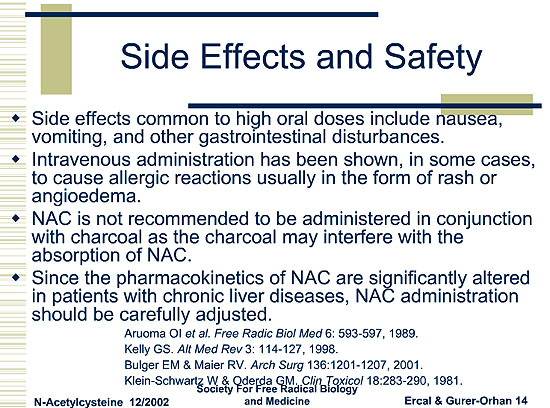
For the Consumer Applies to acetylcysteine: inhalation solution Along with its needed effects, acetylcysteine may cause some unwanted effects. Although not all of these side effects may occur, if they do occur they may need medical attention. Check with your doctor as soon as possible if any of the following side effects occur while taking acetylcysteine: Less common -- ● Wheezing, tightness in chest, or difficulty in breathing (especially in asthma patients) Rare -- ● Skin rash or other irritation Some side effects of acetylcysteine may occur that usually do not need medical attention. These side effects may go away during treatment as your body adjusts to the medicine. Also, your health care professional may be able to tell you about ways to prevent or reduce some of these side effects. Check with your health care professional if any of the following side effects continue or are bothersome or if you have any questions about them: Less common ● Clammy skin ● fever ● increase in amount of mucus in lungs ● irritation or soreness of mouth, throat, or lungs ● nausea or vomiting ● runny nose For patients using a face mask for inhalation of acetylcysteine: the mask may leave a stickiness on your face. This can be removed with water. When you use acetylcysteine, you may notice that the medicine has an unpleasant odor at first. However, this smell will go away soon after you use the medicine. |
|
What is N-acetyl Cysteine?
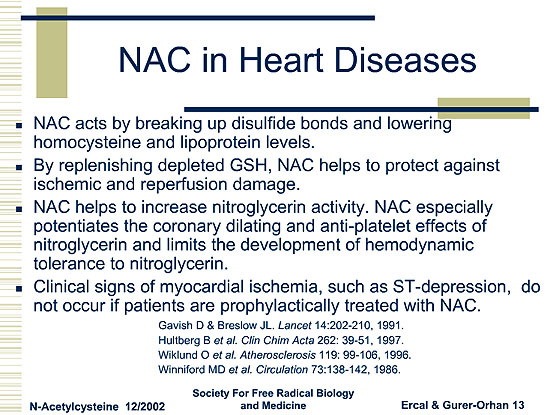
(From RxList) N-acetyl cysteine comes from the amino acid L-cysteine. (Amino acids are the building blocks of proteins). Effective for... ● Helping to prevent crusting in people with tracheostomy. ● Acetaminophen (Tylenol) poisoning. ● Reducing mucus and helping with breathing in various lung conditions. ● Cystic fibrosis. Possibly Effective for... ● Chest pain (angina). ● Preventing complications of chronic bronchitis. ● Preventing complications of lung disease (chronic obstructive pulmonary disease, COPD). ● Preventing side effects of ifosfamide (Ifex, used for certain types of cancer). ● Preventing kidney problems with dyes used during some X-ray exams. ● Reducing homocysteine levels (a possible risk factor for heart disease). ● Reducing symptoms of the flu. ● Treating some types of epilepsy (seizures). ● Treating a lung disease called fibrosing alveolitis. ● Preventing problems such as heart attack and stroke in people with serious kidney disease. Possibly Ineffective for... ● Preventing side effects of doxorubicin (used for certain types of cancer). ● Treating amyotrophic lateral sclerosis (ALS, Lou Gehrig's disease). Likely Ineffective for... ● Preventing new tumors in people with head and neck cancer, or lung cancer. ● Treating Alzheimer's disease. ● Improving how the body responds to nitroglycerin (Nitrostat). ● Treating organ failure. Insufficient Evidence to Rate Effectiveness for... ● Carbon monoxide poisoning; allergic reactions to phenytoin (Dilantin); ear infections; hayfever; removing heavy metals such as mercury, lead, and cadmium from the body; chronic fatigue syndrome (CFS); preventing alcoholic liver damage; protecting against environmental pollutants; colon cancer; and other conditions. |
|
Dosing considerations for N-acetyl Cysteine.
(From RxList) The following doses have been studied in scientific research: BY MOUTH: ● For acetaminophen (Tylenol) overdose: at the beginning of treatment, a first high dose of 140 mg/kg of a 5% solution of N-acetyl cysteine is given. The commercially available 10% and 20% solutions may be diluted with water, carbonated, or non-carbonated beverages, and given through a straw to lessen the unpleasant odor of N-acetyl cysteine. Seventeen additional doses of 70 mg/kg as a 5% solution are given every 4 hours, for a total dose of 1330 mg/kg over 72 hours. ● For chest pain that is not relieved by rest (unstable angina): 600 mg of N-acetyl cysteine three times daily with a nitroglycerin patch. ● For preventing sudden worsening of chronic bronchitis: doses of 200 mg twice daily, 200 mg three times daily, 300 mg slow-release twice daily, and 600 mg controlled-release twice daily have been used. ● For treating chronic obstructive pulmonary disease (COPD): 600 mg of N-acetyl cysteine once daily, in addition to standard care, has been used for up to 6 months. ● For treating a lung condition called fibrosing alveolitis that makes breathing difficult: 600 mg of N-acetyl cysteine 3 times daily. ● For preventing damage to the bladder due to treatment with a cancer drug called ifosfamide: 1 to 2 grams of N-acetyl cysteine every 6 hours. ● For reducing levels of homocysteine in the blood: 1.2 grams of N-acetyl cysteine daily. ● For myoclonus epilepsy: 4-6 grams daily. ● For reducing flu symptoms: 600 mg twice daily. ● For reducing the risk of heart attacks and strokes in patients with end-stage kidney disease: 600 mg twice daily. ● For skin wounds due to hemodialysis treatment: 200 mg four times daily or 600 mg twice daily. ● For preventing kidney damage associated with the use of iopromide (Ultravist-300) for diagnostic tests: 400 to 600 mg of N-acetyl cysteine twice daily on the day before and on the day of iopromide administration, with IV saline (0.45%) 1 mL/kg body weight per hour for 12 hours before and 12 hours after iopromide administration. ● For trichotillomania (hair-pulling): N-acetyl cysteine 1200 mg to 2400 mg daily has been used. INTRAVENOUS: ● Healthcare providers give N-acetyl cysteine intravenously (by IV) for acetaminophen poisoning. |
|
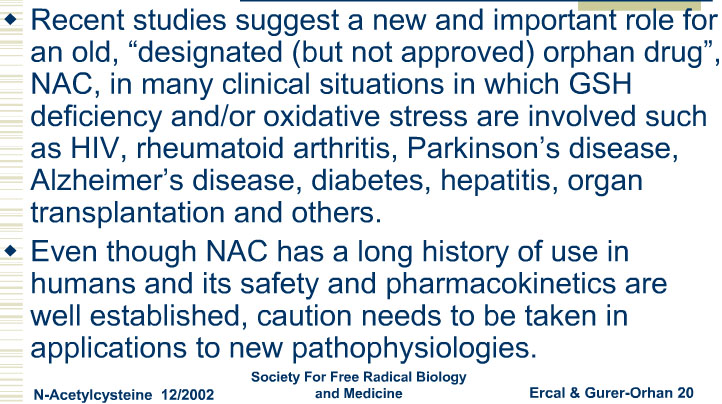
Antioxidant, NAC, N-acetyl cysteine, increases glutathione
|
NAC - N''Acetyl Cysteine helps repair muscle tissue and fight aging
|
